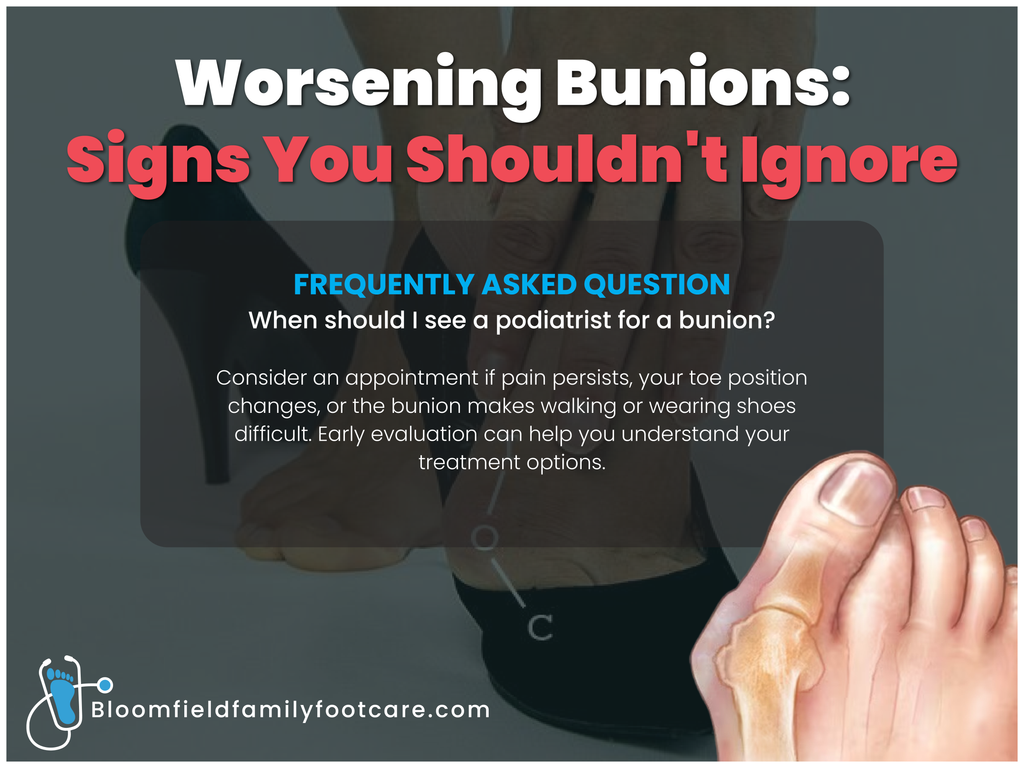
A bunion is a bony bump that forms near the base of the big toe when the joint changes position over time. It may start as a small bump with little discomfort, but bunions can become more painful and affect how you walk. If you have noticed changes in your big toe or increasing difficulty finding comfortable shoes, it is worth paying attention to your symptoms. Early evaluation can help you understand what is happening and explore ways to manage the discomfort.
6 Signs Your Bunion May Be Getting Worse
Bunions do not always cause pain, but certain changes may mean the condition needs attention. Watch for these signs:
- Increasing pain: Your big toe joint hurts more often, even during everyday activities.
- Growing redness or swelling: The skin around the bump becomes irritated, especially after wearing shoes.
- Difficulty finding comfortable shoes: Shoes that once fit well now press against the bunion.
- Changes in toe position: Your big toe moves closer to or overlaps the second toe.
- Pain while walking: Discomfort makes it harder to stand, exercise, or enjoy regular activities.
- Hard skin or corns: Repeated pressure and rubbing cause thickened skin around the toes.
What Can You Do About a Painful Bunion?
Start by choosing shoes with a wide, roomy toe box, low heels, and enough cushioning. Avoid narrow or pointed footwear that squeezes your toes together. Protective padding may reduce rubbing, but it should not make your shoe feel tighter. Depending on your symptoms, a podiatrist may recommend footwear changes, orthotics, activity adjustments, or other treatments to help reduce pressure and pain. These approaches may improve comfort, but they do not reverse the underlying bone alignment.
If your bunion pain keeps returning, worsens, or interferes with walking, schedule an evaluation rather than simply putting up with it. A podiatrist can assess the joint, check your foot function, and discuss options based on the severity of the condition. Sudden severe pain, marked redness and warmth, or a rapid change in swelling should be evaluated promptly, since these symptoms may have causes other than a bunion.
For residents of Bloomfield Hills and nearby Michigan communities, Bloomfield Family Footcare can help assess bunion discomfort and provide guidance on appropriate foot care. You deserve footwear and treatment options that help you stay active as comfortably as possible.
Quick FAQs
1. Do bunions get worse over time?
They can. Bunions may gradually become more noticeable or painful, although the rate of change varies from person to person.
2. Can shoes make bunions worse?
Tight, narrow, or high-heeled shoes can increase pressure and irritation around a bunion. Roomier footwear may help reduce discomfort.
3. When should I see a podiatrist for a bunion?
Consider an appointment if pain persists, your toe position changes, or the bunion makes walking or wearing shoes difficult. Early evaluation can help you understand your treatment options.
Contact Information & Services
Bloomfield Family Footcare – Bloomfield Hills
10 West Square Lake, Suite 300
Bloomfield Hills, MI 48302
📞 Phone: (248) 333-4900
Bloomfield Family Footcare – Dearborn
2035 Monroe St
Dearborn, MI 48124
📞 Phone: (313) 253-0600
SERVICES
https://bloomfieldfamilyfootcare.com/services/
SOCIAL MEDIA
FACEBOOK & INSTAGRAM