Why Does Gout Often Affect the Big Toe?
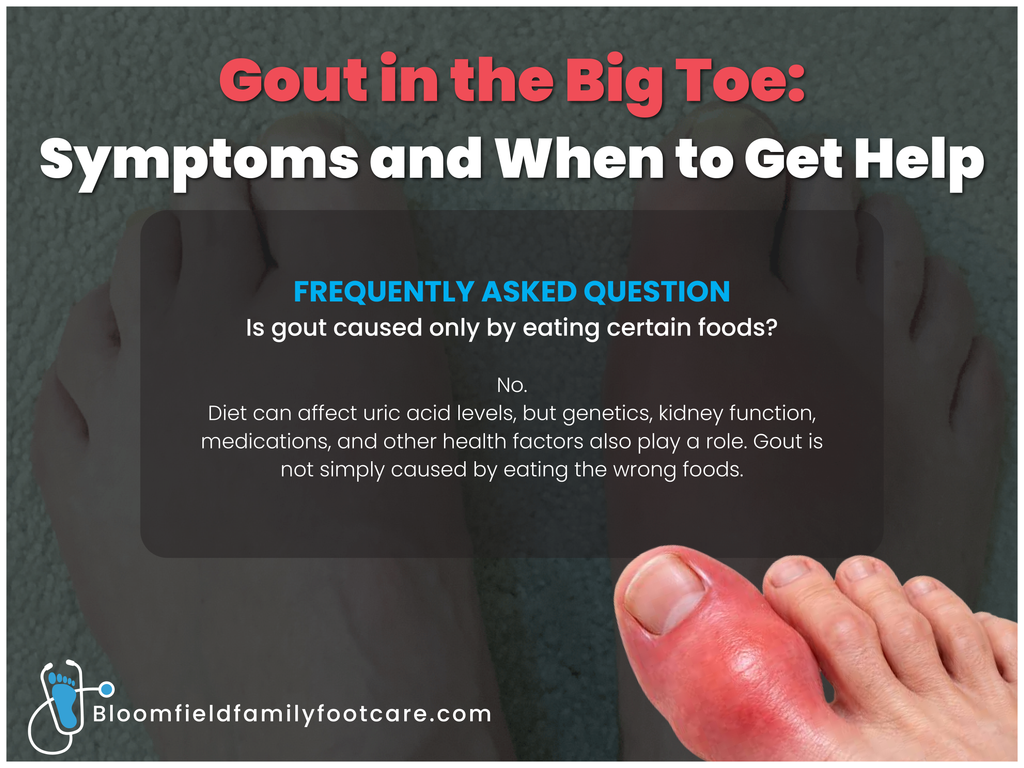
Have you ever woken up with a big toe that is suddenly painful, swollen, red, and warm to the touch? It could be a sign of gout, a type of arthritis that can cause intense pain in the joints. Gout often affects the big toe because cooler temperatures in the foot can make uric acid crystals more likely to form in the joint.
Gout develops when uric acid builds up in the blood and forms sharp crystals inside or around a joint. These crystals trigger inflammation, which can lead to sudden and severe pain. An attack may happen overnight and become so uncomfortable that even the pressure of a bedsheet feels painful. While the big toe is a common location, gout can also affect the ankles, knees, and other joints.
Common Symptoms of Gout in the Big Toe
Gout symptoms often appear suddenly and may become intense within hours. Watch for these warning signs:
- Sudden, severe pain: The big toe joint may become extremely painful without warning.
- Swelling: The joint can become noticeably swollen and tender.
- Redness and warmth: The skin around the joint may look red, shiny, or feel hot.
- Extreme sensitivity: Even light contact from socks, shoes, or bedsheets may hurt.
- Limited movement: Bending or moving the big toe may become difficult.
Gout attacks can last for several days or longer. The pain may eventually improve, but that does not mean the condition has gone away. Without proper management, attacks may return and can lead to ongoing joint damage.
What Causes Gout, and When Should You Get Help?
Gout is linked to high uric acid levels, but not everyone with high uric acid develops gout. Factors that may increase the risk include family history, kidney problems, certain medications, alcohol use, and diets high in purines, which are found in some meats and seafood.
If you experience sudden swelling, redness, and severe big toe pain, arrange a medical evaluation. Do not assume it is gout without a proper diagnosis. Other conditions, including a joint infection or injury, can cause similar symptoms. Seek urgent medical care if the joint is hot and swollen and you also have a fever, chills, or feel unwell, as a joint infection needs prompt treatment.
A healthcare professional may review your symptoms, examine the joint, and recommend blood tests or other testing. Treatment may include medication to control inflammation and a long-term plan to manage uric acid levels. At Bloomfield Family Footcare, patients in Bloomfield Hills and nearby Michigan communities can seek guidance for painful foot and toe conditions and learn what steps may help protect their foot health.
Frequently Asked Questions
1. Can gout go away on its own?
A gout attack may settle without treatment, but the underlying condition can remain. Medical care can help manage symptoms and reduce the risk of future attacks.
2. Should I walk if I have gout in my big toe?
Resting the painful joint and avoiding activities that increase discomfort may help during an attack. Do not force yourself to walk through severe pain.
3. Is gout caused only by eating certain foods?
No. Diet can affect uric acid levels, but genetics, kidney function, medications, and other health factors also play a role. Gout is not simply caused by eating the wrong foods.
Contact Information & Services
Bloomfield Family Footcare – Bloomfield Hills
10 West Square Lake, Suite 300
Bloomfield Hills, MI 48302
📞 Phone: (248) 333-4900
Bloomfield Family Footcare – Dearborn
2035 Monroe St
Dearborn, MI 48124
📞 Phone: (313) 253-0600
SERVICES
https://bloomfieldfamilyfootcare.com/services/
SOCIAL MEDIA
FACEBOOK & INSTAGRAM