Why Does My Child’s Heel Hurt?
If your child complains of heel pain after running, jumping, or playing sports, it may be more than ordinary soreness. One possible cause is Sever’s disease, a common condition that affects growing children and teenagers. Despite its name, it is not a serious disease. It is an irritation of the growth area at the back of the heel bone.
Sever’s disease often affects children between the ages of 8 and 14, especially those who participate in activities like soccer, basketball, gymnastics, and running. During growth spurts, the heel bone may grow faster than the surrounding muscles and tendons. Repeated pulling from the Achilles tendon, combined with running and jumping, can irritate the growth plate and cause pain.
Common Signs of Sever’s Disease
Children with Sever’s disease may experience:
- Pain at the back or bottom of the heel
- Heel tenderness when touched or squeezed
- Limping or walking on their toes to avoid pressure
- Pain that gets worse during or after sports
- Stiffness or discomfort after physical activity
The pain may affect one or both heels. Some children feel better after resting but experience discomfort again when they return to sports or other activities.
How Is Sever’s Disease Treated?
The good news is that most children improve with simple, non-surgical care. Treatment focuses on reducing irritation while allowing the heel to continue growing.
A podiatrist may recommend:
- Rest and activity changes: Temporarily reduce running, jumping, and other activities that cause pain.
- Ice: Apply a cold pack wrapped in a towel to the heel for 15–20 minutes after activity.
- Supportive footwear: Choose comfortable shoes with good cushioning and heel support.
- Heel cups or inserts: These may help reduce pressure and provide additional cushioning.
- Gentle stretching: Calf and Achilles tendon stretches may help when recommended by a healthcare professional.
Avoid encouraging your child to play through significant heel pain. If symptoms continue, worsen, or affect normal walking, a podiatrist can examine the heel and check for other possible causes of pain.
When Should Your Child See a Podiatrist?
Heel pain should not automatically be dismissed as growing pains. A proper evaluation can help identify the cause and guide the right treatment. Seek medical attention promptly if your child cannot put weight on the foot, has severe pain, significant swelling, redness, fever, or pain following an injury.
At Bloomfield Family Footcare, we understand how important it is for children to stay active and comfortable. If your child is experiencing ongoing heel pain, a podiatric evaluation can help determine what is causing the discomfort and what steps may help them return to their favorite activities safely.
Frequently Asked Questions
1. Can children outgrow Sever’s disease?
Yes. Sever’s disease usually improves as the heel growth plate matures and eventually closes. Symptoms can come and go during growth, especially with sports and physical activity.
2. Should my child stop playing sports?
Your child may need a temporary break or reduced activity if sports cause pain. The right level of activity depends on the severity of symptoms and should be guided by a healthcare professional.
3. Is Sever’s disease the same as growing pains?
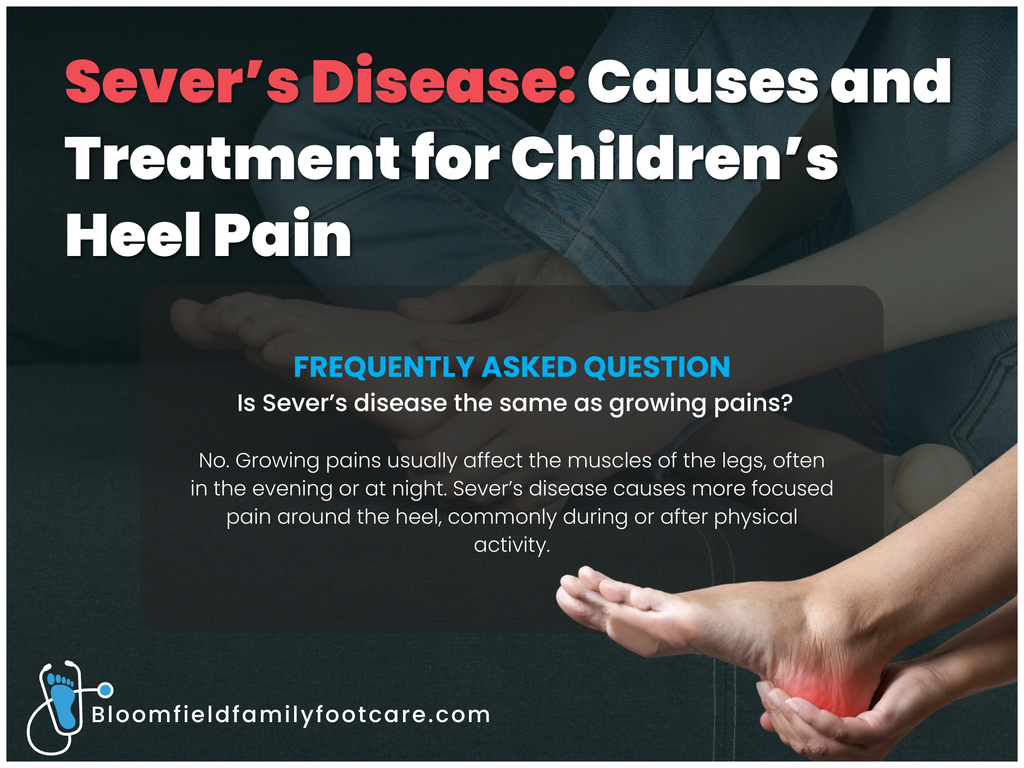
No. Growing pains usually affect the muscles of the legs, often in the evening or at night. Sever’s disease causes more focused pain around the heel, commonly during or after physical activity.
Contact Information & Services
Bloomfield Family Footcare – Bloomfield Hills
10 West Square Lake, Suite 300
Bloomfield Hills, MI 48302
📞 Phone: (248) 333-4900
Bloomfield Family Footcare – Dearborn
2035 Monroe St
Dearborn, MI 48124
📞 Phone: (313) 253-0600
SERVICES
https://bloomfieldfamilyfootcare.com/services/
SOCIAL MEDIA
FACEBOOK & INSTAGRAM