Have you noticed a small, hard spot on your toe or a thick patch of skin on the bottom of your foot? It could be a corn or a callus. Both develop when your skin experiences repeated pressure or friction, often from shoes that do not fit properly. While they may look similar, they are not exactly the same. Knowing the difference can help you choose the right care and avoid unnecessary discomfort when walking or wearing shoes.
What Is the Difference Between Corns and Calluses?
Corns and calluses are both areas of thickened skin, but they usually appear in different places and have different shapes. Corns are smaller, more focused areas of hard skin that often develop on or between the toes. They may have a firm center and can feel painful when pressed. Calluses are usually larger, flatter, and spread across areas that handle repeated pressure, such as the heels, balls of the feet, or sides of the toes. They are often less painful, although thick calluses can become uncomfortable.
Here are some common signs to look for:
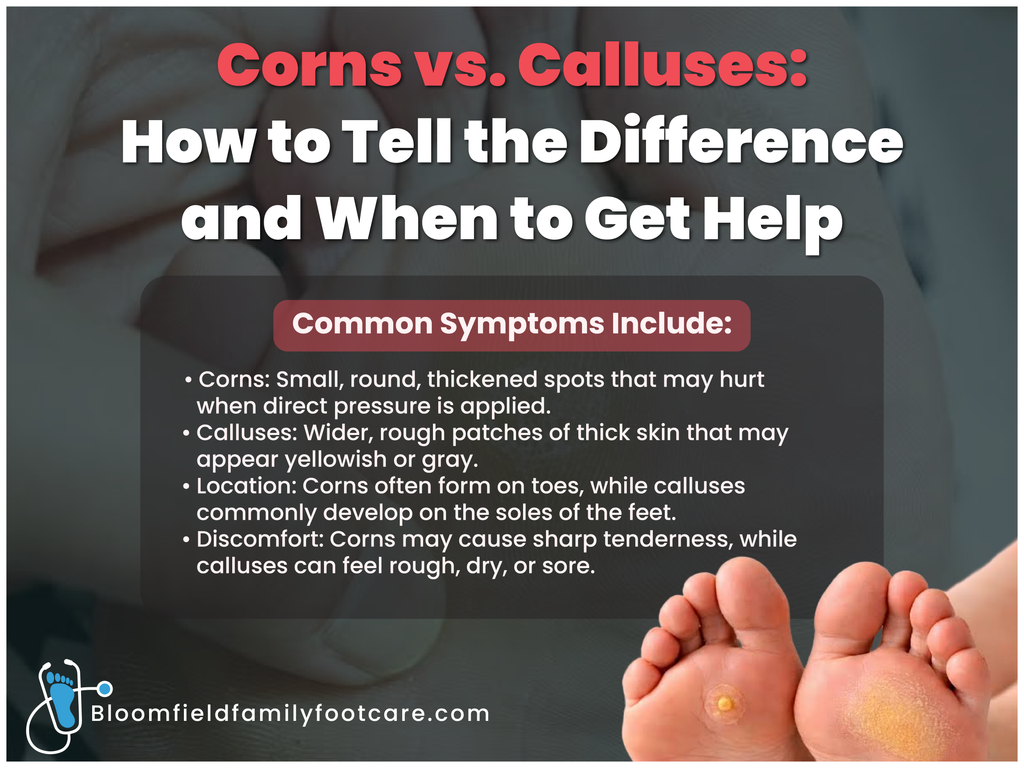
- Corns: Small, round, thickened spots that may hurt when direct pressure is applied.
- Calluses: Wider, rough patches of thick skin that may appear yellowish or gray.
- Location: Corns often form on toes, while calluses commonly develop on the soles of the feet.
- Discomfort: Corns may cause sharp tenderness, while calluses can feel rough, dry, or sore.
What Causes Them and How Can You Prevent Them?
The most common cause of corns and calluses is repeated pressure or friction. Tight shoes, narrow toe boxes, high heels, foot deformities, and walking patterns that place extra weight on certain areas can contribute to their development. To help prevent them, choose comfortable shoes with enough room for your toes, wear cushioned socks, and moisturize dry skin regularly. Avoid wearing shoes that rub against the same area every day.
If you develop a corn or callus, do not cut it off yourself or use sharp tools to remove the thickened skin. Over-the-counter medicated corn removers may also irritate healthy skin, especially if you have diabetes, poor circulation, or reduced sensation in your feet. A podiatrist can safely assess the area, reduce excess thickened skin when appropriate, and check whether an underlying foot problem is causing repeated pressure.
For residents of Bloomfield Hills and nearby Michigan communities, Bloomfield Family Footcare can help evaluate painful corns, calluses, and other foot concerns. Seek professional care if the area becomes red, swollen, warm, drains fluid, or causes increasing pain.
Quick FAQs
1. Can corns and calluses go away on their own?
They may improve when the pressure or friction causing them is removed. However, they can return if the source of irritation continues.
2. Are corns and calluses dangerous?
Most are not serious, but they can become painful or develop skin problems. People with diabetes or circulation issues should have foot changes checked by a healthcare professional.
3. Should I remove a corn or callus at home?
Avoid cutting or shaving thickened skin yourself. A podiatrist can recommend safe treatment and help prevent the problem from returning.
Contact Information & Services
Bloomfield Family Footcare – Bloomfield Hills
10 West Square Lake, Suite 300
Bloomfield Hills, MI 48302
📞 Phone: (248) 333-4900
Bloomfield Family Footcare – Dearborn
2035 Monroe St
Dearborn, MI 48124
📞 Phone: (313) 253-0600
SERVICES
https://bloomfieldfamilyfootcare.com/services/
SOCIAL MEDIA
FACEBOOK & INSTAGRAM