Have you ever finished a long day and noticed that your heels are sore, tired, or painful? Your shoes could be part of the problem. Shoes that don’t fit properly or provide enough support can place extra stress on the feet and heels. Over time, this may contribute to discomfort, especially if you spend hours standing, walking, running, or exercising.
How Can Shoes Cause Heel Pain?
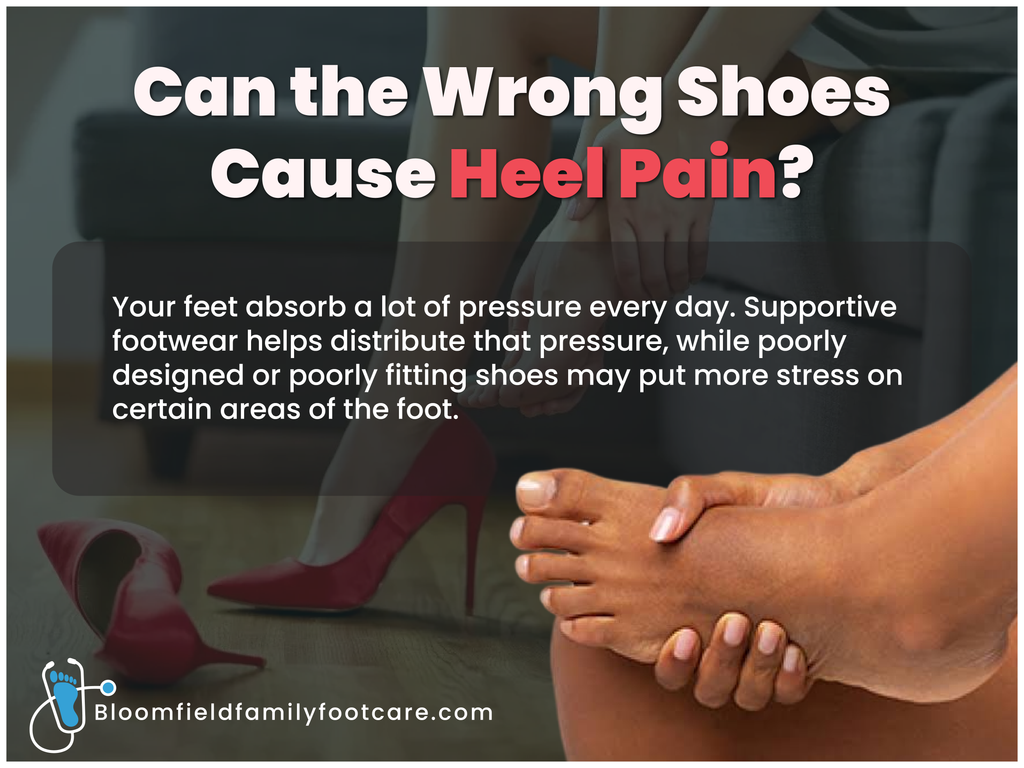
Your feet absorb a lot of pressure every day. Supportive footwear helps distribute that pressure, while poorly designed or poorly fitting shoes may put more stress on certain areas of the foot.
Heel pain may be more likely when your shoes have:
- Little or no arch support
- Very thin or worn-out soles
- Poor cushioning
- An uncomfortable or narrow toe box
- An unstable heel
- A poor fit that causes your foot to slide or rub
- Excessive wear from long-term use
Certain activities can also make the problem worse. Switching suddenly from supportive shoes to flat shoes, spending more time walking, or exercising in worn-out footwear may increase strain on the feet.
What Shoes Are Better for Heel Pain?
There isn’t one perfect shoe for everyone. The right choice depends on your foot shape, activity, and the reason for your heel pain.
When shopping for everyday or athletic shoes, look for:
- A comfortable fit without squeezing your toes
- Good cushioning under the heel
- Support that feels comfortable around the arch
- A secure heel that does not slip
- A sole that provides appropriate stability
- Enough room for your toes to move naturally
Replacing worn-out shoes can also help. If the sole is uneven, the cushioning has broken down, or the shoe no longer feels supportive, it may be time for a new pair.
However, changing shoes isn’t always enough. Plantar fasciitis, Achilles tendon problems, stress injuries, and other foot conditions can also cause heel pain.
When Should You See a Podiatrist?
If your heel pain continues despite changing footwear and reducing activities that aggravate it, consider having your foot evaluated. You should also seek professional care if the pain is severe, keeps returning, causes difficulty walking, or is getting worse.
At Bloomfield Family Footcare, patients in Bloomfield Hills and surrounding Michigan communities can receive a professional evaluation to determine what’s causing their heel pain. Depending on the cause, treatment may include footwear recommendations, stretching and strengthening exercises, orthotics, or other appropriate care.
Don’t assume you simply need to “break in” painful shoes. Persistent heel pain is worth paying attention to.
FAQs
1. Can wearing flat shoes cause heel pain?
For some people, suddenly switching to very flat or unsupportive shoes may increase strain on the feet and contribute to heel discomfort.
2. How do I know if my shoes are causing my heel pain?
Notice whether your pain becomes worse after wearing certain shoes and improves when you switch to more supportive footwear. However, persistent pain should still be evaluated.
3. When should I see a podiatrist for heel pain?
See a podiatrist if heel pain persists, keeps returning, interferes with walking or daily activities, or becomes severe.
Contact Information & Services
Bloomfield Family Footcare – Bloomfield Hills
10 West Square Lake, Suite 300
Bloomfield Hills, MI 48302
📞 Phone: (248) 333-4900
Bloomfield Family Footcare – Dearborn
2035 Monroe St
Dearborn, MI 48124
📞 Phone: (313) 253-0600
SERVICES
https://bloomfieldfamilyfootcare.com/services/
SOCIAL MEDIA
FACEBOOK & INSTAGRAM