Summer is the season for vacations, outdoor activities, and long walks—but it’s also one of the most common times people experience swollen feet. While mild swelling may be harmless after a long day in the heat, persistent or severe swelling can signal an underlying medical condition that should not be ignored.
Knowing when foot swelling is normal and when it requires professional evaluation can help protect your health and prevent serious complications.
Why Feet Swell More During Summer
Many people notice their feet and ankles become larger during hot weather. This occurs because high temperatures cause blood vessels to expand, making it harder for blood and fluids to return to the heart efficiently.
As a result, fluid can accumulate in the feet, ankles, and lower legs, causing noticeable swelling.
Common causes of swollen feet in hot weather include:
- Prolonged standing or walking
- Summer travel and long flights
- Dehydration
- High sodium intake
- Pregnancy
- Certain medications
Although occasional swelling may be expected during warm weather, persistent swelling should never be dismissed.
When Swelling Is Considered Normal
Not all foot swelling is a cause for concern.
Temporary swelling may be considered normal when:
- It improves after elevating your feet
- It occurs after a long day of standing
- Both feet are affected equally
- There is no pain or discoloration
- The swelling resolves within a day or two
However, if swelling becomes frequent, painful, or worsens over time, it may indicate a more serious issue that requires medical attention.
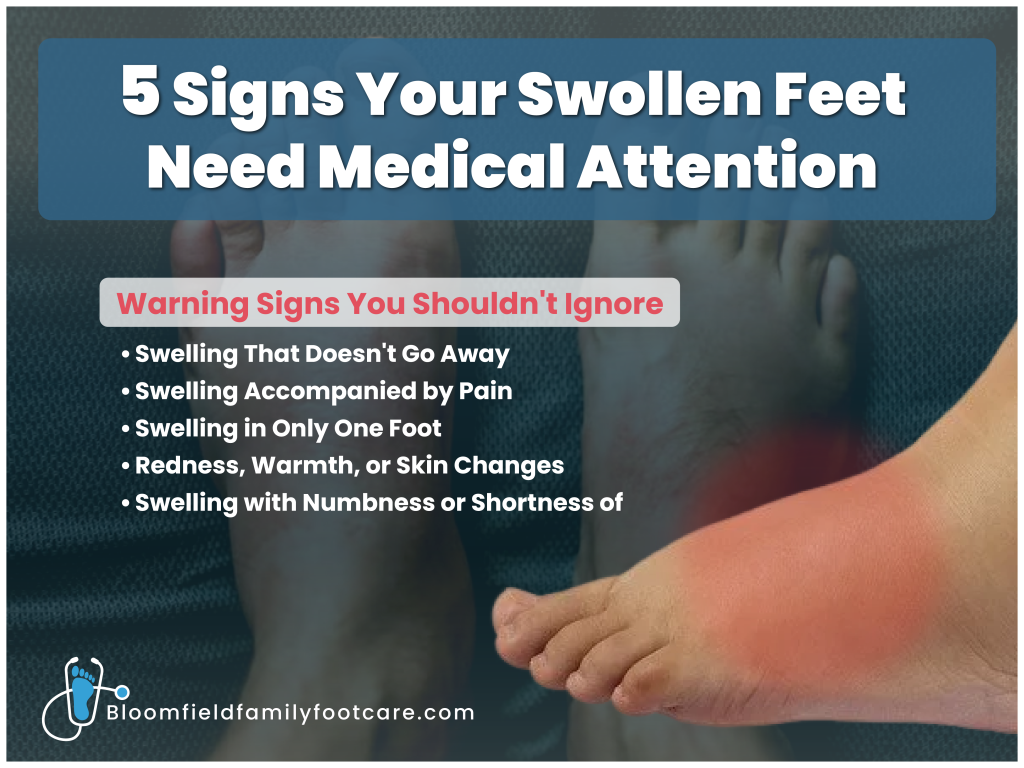
Warning Signs You Shouldn’t Ignore
1. Swelling That Doesn’t Go Away
If your swollen feet persist for several days despite rest and elevation, it could indicate circulation problems, inflammation, or an underlying medical condition.
Chronic swelling should always be evaluated by a healthcare professional.
2. Swelling Accompanied by Pain
Painful swelling is often a sign that something more serious is occurring.
Possible causes include:
- Tendon injuries
- Arthritis
- Stress fractures
- Gout
- Infection
Pain and swelling together should never be ignored, especially if walking becomes difficult.
3. Swelling in Only One Foot
Swelling that affects only one foot or ankle may indicate:
- A blood clot
- Injury
- Infection
- Vein problems
Unilateral swelling requires prompt evaluation because some causes can become serious if left untreated.
4. Redness, Warmth, or Skin Changes
If swollen feet are accompanied by redness, warmth, tenderness, or skin discoloration, infection or inflammation may be present.
Warning signs include:
- Red streaking
- Open wounds
- Fever
- Skin that feels hot to the touch
These symptoms should be evaluated as soon as possible.
5. Swelling with Numbness or Shortness of Breath
Swelling combined with numbness, tingling, chest discomfort, or shortness of breath may indicate a serious medical condition involving circulation or the cardiovascular system.
Seek immediate medical attention if these symptoms occur.
How a Podiatrist Evaluates Swelling
A podiatrist can determine the underlying cause of foot swelling through a comprehensive examination.
During your appointment, your doctor may:
- Review your medical history
- Examine the feet and ankles
- Evaluate circulation and nerve function
- Assess gait and biomechanics
- Recommend diagnostic imaging if necessary
Identifying the root cause is essential for creating an effective foot swelling treatment plan.
Treatment and Prevention Tips
The best treatment depends on the underlying cause of the swelling. However, these strategies may help reduce symptoms and prevent future episodes:
Elevate Your Feet
Raising your feet above heart level encourages fluid to move out of the lower extremities.
Stay Active
Regular movement helps improve circulation and reduces fluid buildup.
Wear Supportive Footwear
Properly fitted shoes provide stability and help reduce strain on the feet and ankles.
Stay Hydrated
Drinking adequate water can help regulate fluid balance and minimize swelling.
Limit Excess Salt
Reducing sodium intake may decrease fluid retention.
Schedule a Professional Evaluation
If swelling becomes frequent, painful, or persistent, a podiatrist can identify the cause and recommend targeted treatment options.
When to See a Foot Doctor
While occasional swelling may be harmless, ongoing symptoms should never be ignored. Early diagnosis can help prevent complications and improve long-term foot health.
If you’re experiencing persistent swollen feet, worsening discomfort, or recurring swelling throughout the summer, it’s time to consult a foot doctor near me for a professional evaluation.
Contact Information
Bloomfield Family Footcare – Bloomfield Hills
10 West Square Lake, Suite 300
Bloomfield Hills, MI 48302
📞 Phone: (248) 333-4900
Bloomfield Family Footcare – Dearborn
2035 Monroe St
Dearborn, MI 48124
📞 Phone: (313) 253-0600