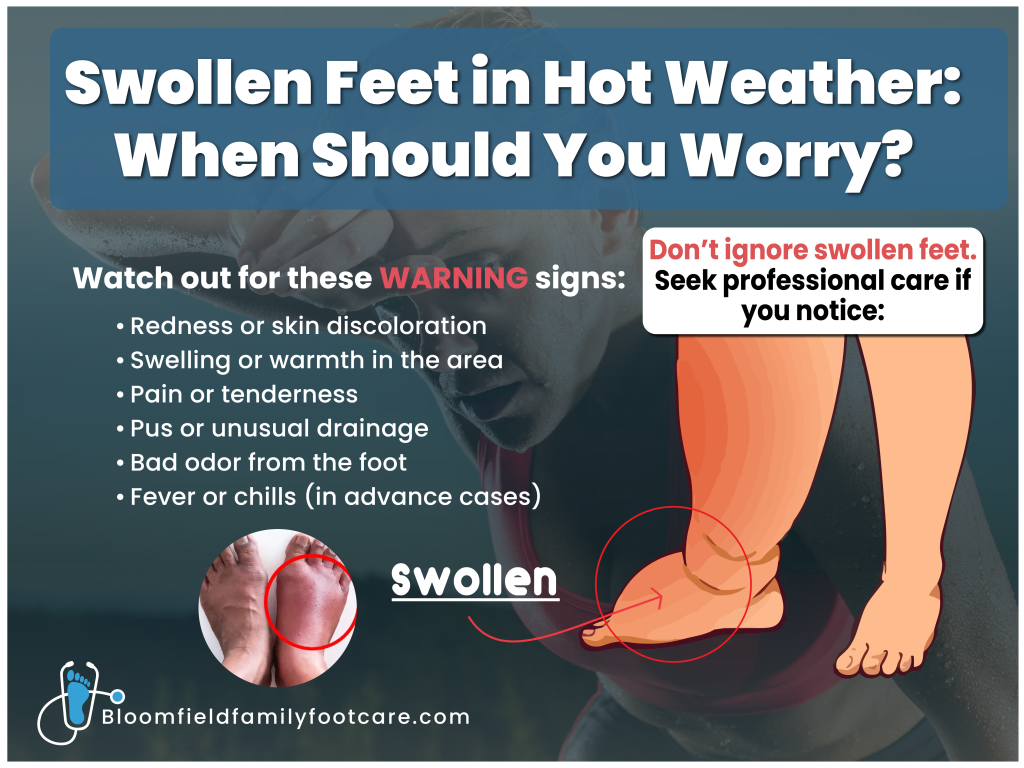
As temperatures rise during the summer, many people notice their feet and ankles becoming swollen by the end of the day. While mild swelling can be a normal response to hot weather, it can sometimes signal an underlying health issue that shouldn’t be ignored.
If you’ve experienced swollen feet in hot weather, understanding the cause can help you determine when simple self-care is enough—and when it’s time to seek medical attention.
Why Do Feet Swell in Hot Weather?
During hot weather, your blood vessels naturally expand to help your body cool down. This process, called heat edema, can cause fluid to collect in your feet, ankles, and lower legs.
Heat-related swelling is especially common when:
- Standing for long periods
- Walking extensively during vacations
- Spending time outdoors
- Wearing tight or restrictive footwear
For many people, the swelling improves after resting and elevating their feet.
What Is Heat Edema?
Heat edema is temporary swelling caused by fluid retention during warm temperatures.
Common symptoms include:
- Puffy feet or ankles
- Tight-fitting shoes by the end of the day
- Mild discomfort or heaviness
- Swelling that improves overnight
While heat edema is usually harmless, persistent or severe swelling should be evaluated by a healthcare professional.
Warning Signs You Shouldn’t Ignore
Not all swelling is caused by the weather.
You should seek medical attention if you experience:
- Swelling in only one foot or leg
- Significant pain
- Redness or warmth
- Sudden swelling
- Shortness of breath
- Skin discoloration
- Open sores or wounds
These symptoms may indicate a more serious condition that requires prompt evaluation.
Diabetes and Circulation Concerns
Individuals with diabetes, poor circulation, or certain heart and vascular conditions should pay close attention to foot swelling.
Swelling may sometimes be linked to:
- Poor blood flow
- Nerve damage
- Venous insufficiency
- Delayed wound healing
For diabetic patients, even minor foot issues can become serious if left untreated.
How to Reduce Swollen Feet During Summer
You can help minimize swelling by:
- Elevating your feet when resting
- Staying hydrated
- Avoiding prolonged standing
- Wearing supportive footwear
- Exercising regularly to improve circulation
- Limiting excess sodium intake
These simple habits can improve comfort and support healthy circulation throughout the summer months.
When Should You See a Podiatrist?
If swelling becomes frequent, painful, or affects your daily activities, it’s time for a professional evaluation.
A podiatrist can identify whether your symptoms are related to:
- Foot structure problems
- Circulation issues
- Inflammation
- Underlying medical conditions
Early diagnosis can help prevent more serious complications and keep you active throughout the summer.
Don’t Ignore Persistent Foot Swelling
While occasional swelling during hot weather is common, ongoing or unusual swelling should never be overlooked.
At Bloomfield Family Footcare, we help patients throughout Bloomfield Hills and surrounding Michigan communities identify the cause of foot and ankle swelling and develop personalized treatment plans.
Frequently Asked Questions
Is it normal for feet to swell in hot weather?
Yes. Mild swelling caused by heat edema is common during warm temperatures, especially after standing or walking for long periods.
Can dehydration cause swollen feet?
Yes. Dehydration can contribute to fluid retention, making swelling worse.
When should I worry about swollen feet?
Seek medical attention if swelling is sudden, painful, affects only one foot, or is accompanied by redness, warmth, or shortness of breath.
Contact Information
Bloomfield Family Footcare – Bloomfield Hills
10 West Square Lake, Suite 300
Bloomfield Hills, MI 48302
📞 Phone: (248) 333-4900
Bloomfield Family Footcare – Dearborn
2035 Monroe St
Dearborn, MI 48124
📞 Phone: (313) 253-0600